
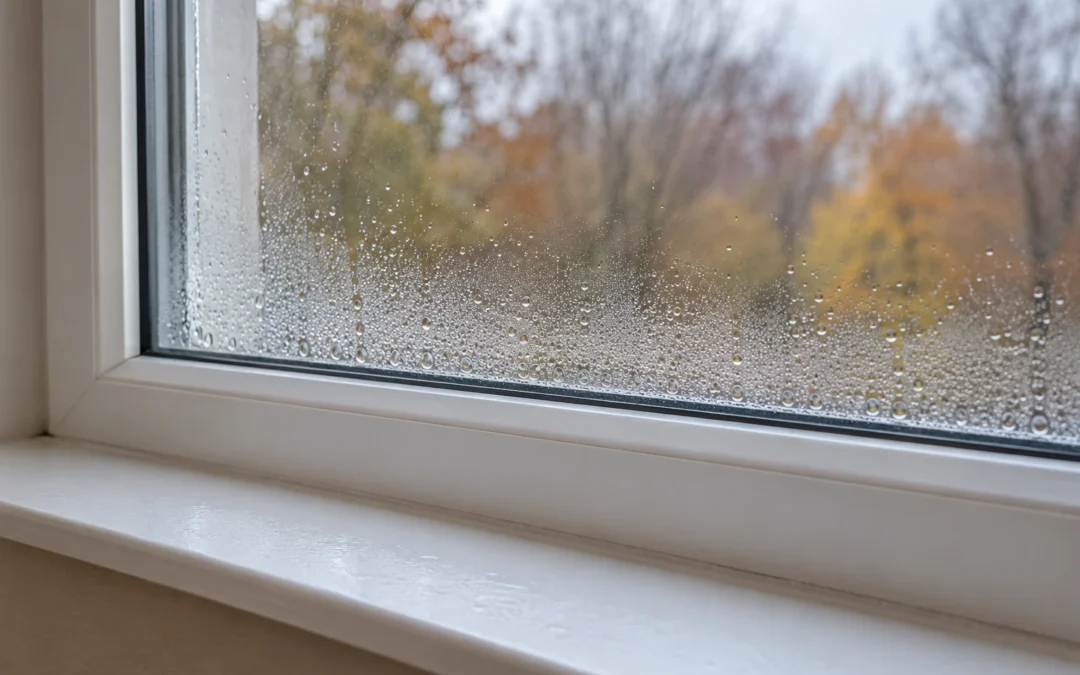
Not necessarily. Window condensation does not, by itself, mean your Niagara home needs new windows. The first question is where the moisture is: on the room-side glass, on the outside surface, or between the panes of a sealed glass unit. Those three situations can call for very different next steps.
Before ordering replacements, record what you can see and check whether there is damage around the opening. A wet window is a reason to investigate, not a diagnosis or an automatic replacement order.
First, locate the moisture
On the room-side surface
Indoor moisture can condense when it meets cold glass. Colder outdoor conditions, higher indoor humidity and restricted airflow near the window can make it more likely. Curtains, blinds or furniture may limit the room air reaching the glass. This is why a window that stayed clear earlier in autumn can become wet on a colder morning.
Natural Resources Canada explains these factors in its window condensation guide. Better-performing glazing can reduce the likelihood, but it does not make indoor moisture management irrelevant.
On the outside surface
Exterior dew is different. The outside glass can cool below the outdoor air’s dew point, particularly after a calm, cool, humid night. It may clear as conditions change during the day. Exterior condensation alone is not evidence that the window needs replacement; Andersen’s explanation of exterior condensation describes this distinction.
Between the panes
Fogging within a modern sealed insulating-glass unit deserves a different assessment. NRCan associates condensation inside a sealed double-glazed unit with seal failure and discusses replacing the glazing unit. That is not necessarily the same job as replacing the complete window and frame. Check the product information and warranty before deciding on the repair scope.
Older storm windows and other non-sealed arrangements are different assemblies. Do not apply the sealed-unit explanation to every window with two layers of glass. See NRCan’s window repair and replacement guidance.
A practical check before requesting an estimate
In Niagara Falls, St. Catharines or elsewhere in the region, useful observations beat a guess based on one photograph. Make a short record for the person assessing the window:
- Which surface? Does a gentle wipe of safely accessible room-side glass remove the moisture? Do not lean out or climb to test the exterior.
- Which windows? Note the room, whether one window or several are affected, and whether the pattern changes with coverings open.
- When? Record the time, outdoor conditions and whether it followed cooking, bathing or overnight occupancy.
- What remains? Photograph the glass and surrounding sill before wiping, then note any persistent fog, staining or deterioration.
- What changed? Mention recent window replacement, ventilation changes or renovation work rather than assuming it is unrelated.
Start with moisture and airflow, not a shopping list
For room-side condensation, Health Canada recommends using kitchen and bathroom exhaust that vents outdoors, opening window coverings, keeping heating vents clear and drying wet window frames and sills. Staining, peeling paint, warped wood or musty odours warrant investigation rather than being covered with new trim or paint. Its moisture and mould guide explains when qualified help is appropriate.
A hygrometer can help you track indoor relative humidity. There is no single setting that guarantees dry windows in every home: outdoor temperature and the glazing assembly affect what happens at the glass. Follow the operating and maintenance instructions for your ventilation equipment; ask a qualified professional if its operation is unclear. NRCan’s home-operation guidance explains that relationship.
If a bathroom renovation is already planned, include existing moisture observations in the brief. Ventilation should be considered alongside the finishes, not after the room is complete.
When does replacement make sense?
Separate the glass, frame and surrounding opening in the assessment. Ask what is actually defective, what can be repaired, and what the proposed work includes. NRCan notes that tighter new windows can also reduce incidental air leakage and increase indoor humidity. Replacing windows is not a substitute for addressing a moisture problem.
Before approving work, ask:
- Is the recommendation for a glass unit, a window component or the complete assembly?
- Has the source of recurring wetting been identified?
- Are surrounding trim, wall repairs and finishing included?
- What warranty applies, and who handles any related ventilation work?
Common questions
Should I replace every window if one is foggy?
Not on that observation alone. Have the affected assembly assessed and compare its condition with the others before agreeing to a whole-home scope.
Can I just repaint a stained sill?
Do not treat paint as the solution to recurring moisture. Establish why the sill is getting wet and what repair is needed before refinishing it.
What should I send Homes By Adam?
Send photographs, the room locations and a short description of when the problem appears. If you are planning broader interior work, contact Homes By Adam to discuss the renovation scope. A glass-only concern may need a window manufacturer or specialist; the goal is the right next step, not replacement for its own sake.
