
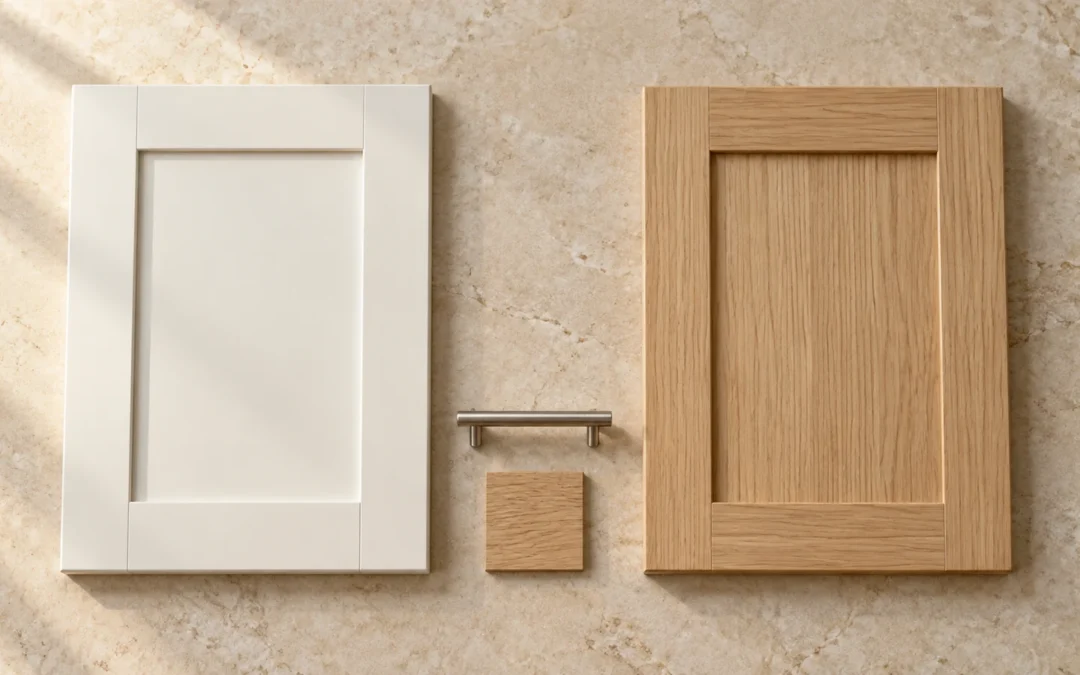
Cabinet refacing is worth considering when the cabinet boxes are sound and the kitchen already works well. Replacement deserves a closer look when damaged cabinetry, poor storage or an awkward layout would remain after new doors were installed. Painting or refinishing may be enough when you like the existing door style and mainly want a different finish.
For a Niagara homeowner, the useful comparison is between complete scopes of work. Start by deciding which parts of the kitchen are worth keeping, then ask what each option would leave unresolved.
Understand what each cabinet update changes
The terminology can overlap, especially in advertisements. Ask each contractor to describe the actual work rather than relying on the package name.
- Painting: The existing boxes, doors and drawer fronts remain, with prepared surfaces receiving a new paint finish. The door profile and cabinet dimensions stay the same.
- Refinishing: Existing components are retained while their finish is renewed. This may involve stripping or sanding and applying stain, clear finish or paint. Confirm the preparation and final coating.
- Refacing: Existing boxes remain, while doors and drawer fronts are replaced and visible cabinet surfaces are covered or finished to coordinate. Hardware and interior upgrades depend on the quoted scope.
- Replacement: Cabinet boxes as well as fronts are replaced. This allows different cabinet sizes and arrangements, although you can also replace cabinets within the existing layout.
Renuit’s comparison of refacing, refinishing and remodelling explains the central distinction: whether the existing boxes and doors are retained. None of these labels, by itself, tells you whether new drawer boxes, shelves or interior finishes are included.
Separate finish problems from cabinet-box problems
A scratched door and a deteriorating sink base call for different decisions. Have the existing kitchen assessed with doors and drawers open, not just from photographs of the fronts.
Point out swollen edges, separating panels, loose joints, damaged hinge attachment points and drawers that bind. Ask whether each issue is a finish defect, an adjustable hardware problem or damage to the cabinet itself. Any active leak needs attention before new finishes conceal the area.
Renuit’s suitability guidance identifies structurally sound cabinets and a satisfactory layout as the starting conditions for refacing. It also allows for individual replacement boxes, so one damaged unit does not automatically settle the decision for the whole kitchen.
Request a written distinction between boxes that can stay, repairs that are needed and units that should be replaced. If several cabinets need rebuilding, compare that combined scope with replacement before ordering new fronts.
Decide whether you need a new colour or new doors
If the current doors are in good condition and you like their shape, ask about painting or refinishing before paying to replace them. If you dislike the profile itself, a colour change will leave that profile in place.
Identify the existing door material and finish before choosing a coating system. A painted wood door, thin wood veneer and a wrapped manufactured door should not simply receive an identical preparation plan.
Benjamin Moore’s Canadian cabinet-paint guidance includes cleaning, surface preparation, priming and drying time. Ask the finisher how the selected products suit your cabinets, what will happen off-site, and when the surfaces can return to normal use. Do not treat a promised installation day as the entire finishing schedule.
Test storage improvements against the existing boxes
Write down the kitchen’s recurring frustrations: pans stacked too deeply, a bin in the walking route, hard-to-reach shelves or too little room beside the refrigerator. Then distinguish problems inside a cabinet from problems caused by its position or size.
Some improvements can fit within a refacing project. The Home Depot Canada’s refacing description lists options such as interior organization, new drawer boxes and cabinet modifications. These are possible additions, not features to assume every quote includes.
Ask for the usable dimensions and proposed fittings for each upgrade. Check whether hinges, plumbing or the cabinet opening interfere with access. A pull-out is only useful if it holds the items you intend to store and opens comfortably in the room.
If the solution requires moving major cabinet runs, changing appliance openings or creating substantially different storage, compare a replacement plan. Our kitchen layout and build-sequence guide covers the wider coordination decisions.
Specify the finish beyond the doors
Ask what happens to exposed end panels, fillers, toe kicks, mouldings and the edges visible when a door opens. Also confirm whether cabinet interiors stay as they are. New fronts do not necessarily mean a newly finished interior.
Review a door sample alongside the proposed material for adjacent cabinet surfaces. Check colour, texture and sheen in the kitchen’s lighting. Where old and new cabinetry meet, ask how the joint and any difference in construction will be handled.
Request care instructions and repair information for the actual finish. Clarify which supplier or installer handles a finish defect, a hardware problem or an installation adjustment.
Coordinate the countertop without letting it decide everything
Tell the project team whether the countertop is staying, being replaced now or likely to change later. Do not assume an existing top can be removed and reused over replacement cabinets; have that proposal assessed before making it part of the budget.
For a new surface, settle cabinet changes before final measurement. For example, Cambria requires cabinets to be permanently installed in the same plane for accurate measurement. Follow the requirements of your chosen product and fabricator.
Our separate guide to replacing countertops while keeping cabinets covers support, sinks and backsplash junctions in more detail.
Compare quotes for the same finished result
A door-only quote and a cabinet replacement quote can describe very different kitchens. Put the inclusions side by side: retained boxes, repairs, fronts, exposed surfaces, drawer boxes, hinges, handles, storage fittings, installation and disposal.
Then add surrounding work: countertop changes, plumbing disconnections, wall repairs, flooring transitions and protection of occupied rooms. Ask which items are allowances or exclusions, whether taxes are included, and how unexpected work will be priced and approved.
Compare the complete schedule too. Separate measurement, product ordering, off-site finishing, work in the home and final adjustments. Confirm when the sink and appliances will be unavailable rather than assuming either option leaves the kitchen fully usable.
Bring this checklist to the first quote visit
- Photographs of the full kitchen, open cabinets, drawer interiors and any damaged areas.
- A short list of what you want to keep and the daily problems you want solved.
- Known leak history, previous repairs and available cabinet or hardware identification.
- Appliance model numbers, including planned replacements, and your countertop intentions.
- Examples of the door style and finish you prefer, without committing to a product yet.
- Your budget limit, preferred timing and practical arrangements for meals, access and material storage.
The decision should follow the assessment: retain useful cabinetry where a finish or front change meets the goal; consider selective repairs where the problem is limited; compare replacement where substantial problems would otherwise remain.
Frequently asked questions
Do older cabinets automatically need to be replaced?
No. Have their condition, construction and suitability for the proposed changes assessed. Age alone does not tell you whether the boxes are worth keeping or whether the existing layout will meet your needs.
What should I compare in the warranties?
Ask for written coverage for the cabinet finish, hardware and installation labour, including exclusions and the process for reporting a problem. Confirm who supplies replacement parts and whether the labour to fit them is included.
If your cabinet decision is part of a broader Niagara kitchen renovation, contact Homes By Adam with photographs and your priorities. Define the overall renovation scope before committing to individual finishes.
