
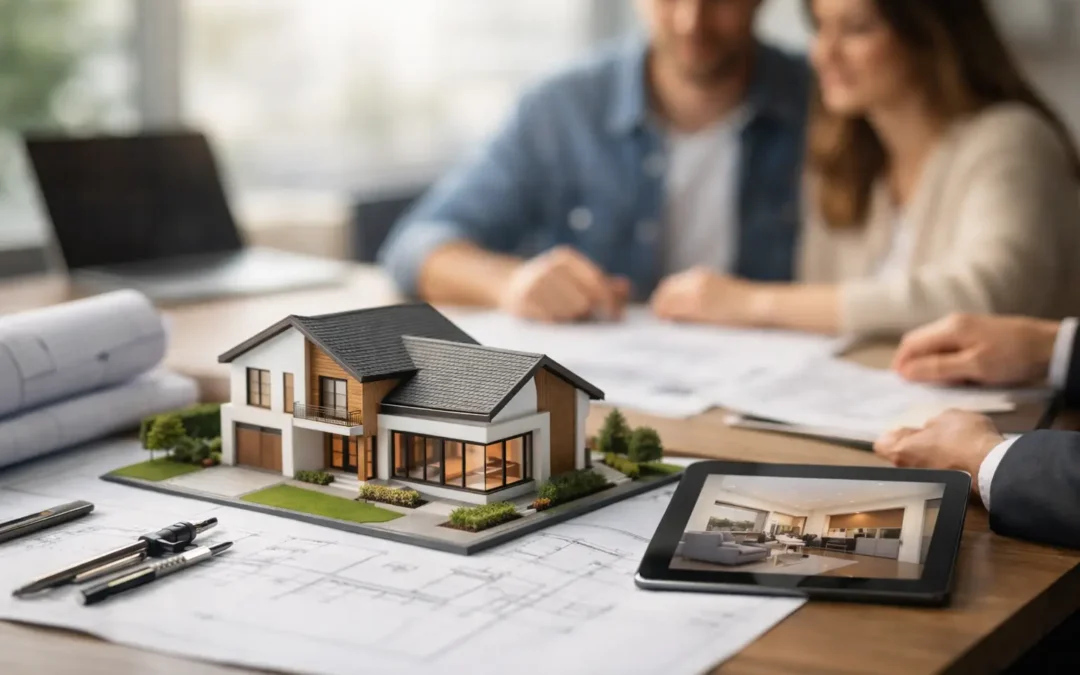
Building a custom home is exciting right up until the choices start stacking up. Floor plan, lot conditions, ceiling heights, window placement, storage, finishes, budget allowances – every decision affects the next one. A strong custom home design guide helps you make those decisions in the right order, so the finished home feels intentional, functional, and built for the way you actually live.
The biggest mistake homeowners make is treating design like a style exercise. Good custom home design starts with function, then moves into comfort, durability, and appearance. A beautiful house that lacks storage, natural light, or practical flow will show its flaws quickly. The goal is not just to build a house that looks impressive on day one. It is to build one that continues to work well for your family years from now.
Start your custom home design guide with real life
Before reviewing plans or collecting finish ideas, get clear on how your household uses space. That sounds simple, but it is where many projects either gain direction or drift. The right layout depends on your routines, not on what happens to be popular.
Think about how mornings run in your home, where clutter gathers, whether you entertain often, and how much privacy each family member needs. A family with young children may want bedrooms grouped closer together. Homeowners with older kids or frequent guests may prefer more separation. If you work from home, the office should not feel like an afterthought squeezed beside a noisy main living area.
This is also the point where future planning matters. If you expect your needs to change over the next five to ten years, design for that now. Aging parents, teenagers, mobility concerns, and multi-use rooms all affect how wisely the home will serve you over time. Square footage matters, but thoughtful use of square footage matters more.
Lot conditions shape the design more than most people expect
A custom home should respond to the property, not fight against it. The lot influences setbacks, grading, drainage, driveway placement, garage orientation, privacy, and the amount of natural light you can bring inside. Even a strong floor plan on paper may need major revisions once the realities of the site are considered.
Window placement is a good example. The best locations are not always based on symmetry from the outside. They should also account for views, neighboring homes, sun exposure, and how each room will feel throughout the day. A kitchen flooded with late afternoon heat may not be as comfortable as it first sounds. A primary bedroom facing a busy street may need a different strategy for privacy and noise control.
This is where experienced planning pays off. When design and construction thinking happen together early, homeowners avoid expensive changes later.
Build the layout around flow, not just room count
Most people start by listing the rooms they want. That is useful, but room count alone does not create a good home. Flow is what makes a house comfortable to live in.
A well-designed layout considers how people move from one area to another, where sightlines matter, and where the home should open up or feel more private. Kitchens often work best when they connect naturally to dining and living areas, but there should still be enough separation to manage noise, mess, and traffic. Mudrooms need to be close to the garage or main family entry. Laundry should be convenient without becoming the first thing everyone sees.
The same principle applies upstairs and downstairs. If bedrooms are too close to high-traffic areas, rest and privacy suffer. If every bathroom opens directly into visible common areas, the plan may look efficient but feel awkward in daily life. Good design is not only about fitting everything in. It is about making each part of the house feel like it belongs.
Open concept is not always the answer
Many homeowners ask for open-concept living, and in the right home it can work beautifully. It creates connection, better light, and a more spacious feel. But there are trade-offs.
Too much openness can reduce wall space, increase noise, and make heating, cooling, and furniture placement more challenging. In some homes, partial separation works better than one large uninterrupted room. That might mean a walk-through pantry, a defined dining zone, a ceiling detail, or a strategically placed opening that keeps connection without sacrificing function.
Good design is rarely about following a trend exactly. It is about choosing what fits your home and your lifestyle best.
Budget should guide decisions early
One of the most valuable parts of any custom home design guide is understanding that budget is a design tool, not just a final checkpoint. Waiting until drawings are complete to ask whether the home is affordable usually leads to disappointment, redesign, or compromises in the wrong places.
A realistic budget helps prioritize where to invest. For some homeowners, the kitchen, primary suite, and exterior materials deserve the strongest focus. For others, it may be energy performance, custom built-ins, or a better garage and mudroom setup. Every project has limits, even at the premium end of the market. The difference between a stressful build and a well-managed one often comes down to deciding where value matters most.
It also helps to separate must-haves from nice-to-haves. Heated floors may be worth it in one bathroom and unnecessary in another. A dramatic two-story feature may look impressive but add structural and finishing cost without improving daily life. Smart planning protects both quality and financial control.
Materials and finishes should be chosen for longevity
Custom homes invite personal expression, but lasting value comes from balancing style with durability. This is especially true in high-use areas like kitchens, bathrooms, entryways, and family spaces. The right materials should look good, wear well, and suit the level of maintenance you are willing to take on.
Natural materials can bring warmth and character, but some require more upkeep. Large-format tile can feel clean and current, but installation quality matters. Wood cabinetry adds richness, though the finish and construction quality will shape how it performs over time. Engineered options can be a smart choice when they offer stability and easier maintenance without sacrificing appearance.
This is where workmanship matters as much as product selection. Even premium finishes can disappoint if they are installed poorly or rushed.
Storage is one of the first things homeowners wish they had added
Storage rarely gets the same attention as kitchens or exterior curb appeal, but it affects daily comfort more than many design features. When storage is overlooked, clutter takes over fast.
A good plan considers where coats, sports gear, small appliances, cleaning supplies, seasonal decor, and everyday household items will actually go. Walk-in closets help, but so do built-in mudroom lockers, deep pantry shelving, linen storage in the right locations, and thoughtful cabinetry throughout the home. Garage organization also deserves attention early, especially for families who use that space as more than a parking spot.
The best storage solutions are built into the plan from the start. Trying to add them later usually costs more and works less effectively.
Work with a team that can connect design to execution
A custom home is not just a design project. It is a construction project with hundreds of moving parts. That is why the relationship between planning and execution matters so much.
When homeowners work with a contractor who values communication, craftsmanship, and project management, the design process becomes more grounded. You get practical feedback on what will perform well, what may cause delays, and where certain ideas are worth the investment. You also get clearer expectations around scheduling, pricing, and quality standards.
For homeowners in the Niagara region, that local experience matters. Site conditions, permitting, weather, and trade coordination all influence how smoothly a custom build moves from concept to completion. A company like Homes By Adam brings value not just through craftsmanship, but through accountability from the first conversation to the final walkthrough.
Questions worth asking before design is finalized
Before signing off on plans, make sure you can answer a few practical questions with confidence. Can the layout support your life five years from now, not just today? Have you accounted for storage, furniture placement, and traffic flow? Are the window and door locations driven by light and function, not just exterior symmetry? Have material selections matched your expectations for maintenance, comfort, and durability?
If the answer to any of those is uncertain, it is better to adjust the design early. Paper changes are far less expensive than construction changes.
A well-designed custom home feels easy to live in
The best custom homes do not just show well. They feel settled, practical, and personal from the moment you move in. The rooms make sense. The details hold up. Nothing feels forced.
That is what this custom home design guide comes down to. Make decisions in the right order, stay honest about how you live, and work with professionals who care about getting the details right. A custom home should reflect your taste, but more importantly, it should support your life with quality you can see and reliability you can feel every day.
If you plan carefully at the beginning, the finished home will not need to prove itself with flashy features. It will simply work, and that is what lasting craftsmanship looks like.