
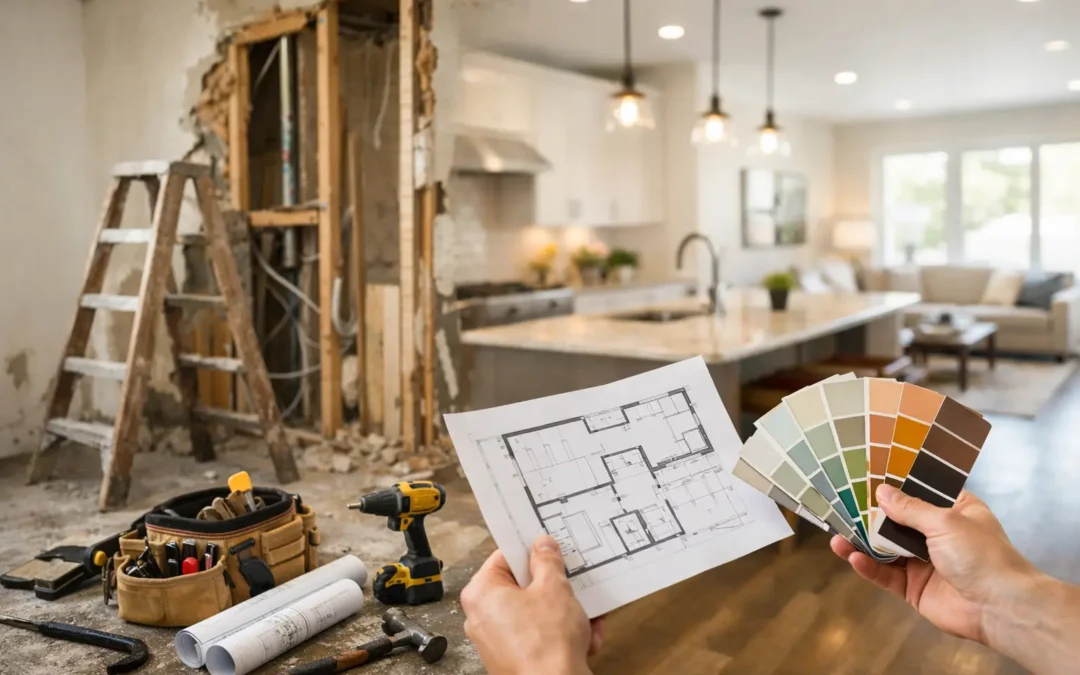
A full renovation usually starts the same way – with a house that no longer fits the way you live in it. The kitchen is tight, the storage falls short, the finishes feel dated, or the layout creates daily frustration. This guide to full home renovation is built for homeowners who want more than cosmetic change. It is for those planning a serious investment and expecting thoughtful design, dependable execution, and a result that feels right for years to come.
A whole-home renovation can improve comfort, function, and long-term value, but it also asks for clear decisions early. The best projects are not driven by impulse. They are shaped by a realistic budget, a defined scope, and a contractor who can guide the work from planning through completion without losing sight of quality.
What a full home renovation really involves
A full renovation is more than replacing cabinets and flooring in a few rooms. In many homes, it means reworking layouts, updating plumbing and electrical systems, improving insulation, replacing worn finishes, and bringing the house up to a better standard overall. Some projects stay within the existing footprint. Others include additions, garage builds, or structural changes that reshape how the home functions.
The scope depends on the age of the property, the condition of existing materials, and your goals. A newer home may need a design-driven overhaul focused on kitchens, bathrooms, millwork, and flooring. An older home may need deeper work behind the walls before the visual upgrades can begin. That difference matters because the budget and timeline can shift quickly when hidden issues are part of the equation.
Start with the why, not just the wish list
Before finishes are discussed, define what you want the renovation to solve. That sounds simple, but it is where many projects gain clarity or lose it. If your main goal is better flow for a growing family, your decisions will look different than if you are renovating for aging in place, entertaining, or long-term resale value.
This is also the stage where priorities need to be separated from nice-to-haves. Heated floors may be worth it in a primary bathroom you use every day. A built-in coffee station may feel less essential if the budget is already stretched by structural work. Trade-offs are part of every well-run renovation, and making them early is far better than making them under pressure halfway through construction.
Budgeting for quality without guessing
One of the most common mistakes in a guide to full home renovation is treating budget as a single number rather than a working framework. A realistic renovation budget includes construction, design, permits, product selections, contingency, and temporary living costs if the house will be difficult to occupy during the work.
The contingency is where discipline matters. In older homes especially, surprises are common. Water damage, outdated wiring, uneven framing, and previous shortcut repairs are often uncovered once demolition begins. That does not mean the project is off track. It means the plan was realistic enough to account for what cannot be seen on day one.
Premium work also carries a different cost structure than builder-grade updates. Better materials, experienced trades, tighter project management, and more refined finishes are not interchangeable with low-bid pricing. If your goal is a finished home that looks polished, performs well, and lasts, the budget has to support that standard.
Choosing the right renovation partner
The contractor you hire will shape more than the work itself. They will influence how clearly the project is priced, how well the schedule is managed, how problems are handled, and how much stress you carry through the process. For a whole-home renovation, that relationship matters as much as the final finishes.
Look for a team that can explain scope clearly, identify likely problem areas, communicate changes early, and stay accountable through every phase. Good contractors do not promise that nothing will come up. They explain how issues are handled when they do. That kind of honesty is often the difference between a project that feels steady and one that feels chaotic.
Homeowners in the Niagara region often want one trusted team to manage the process from planning to completion, and that is where an experienced full-service contractor brings real value. Firms like Homes By Adam build trust by combining craftsmanship with straightforward communication and owner-led accountability.
Design decisions that affect everything later
The early design phase sets the tone for the entire renovation. Layout changes, cabinet planning, lighting placement, flooring transitions, storage strategy, and finish selections all connect. When these decisions are made in isolation, the result can feel disjointed. When they are planned together, the home feels intentional.
This is especially true in open-concept spaces. A kitchen renovation does not live alone if it opens into a dining area, family room, or mudroom. Materials, sightlines, and function have to work across the full space. The best design choices are not always the most expensive ones. Often, they are the ones that solve daily friction and create a cleaner, more balanced result.
It also helps to know where to spend and where to hold back. Custom cabinetry, quality windows, stone surfaces, and durable flooring usually deliver long-term value. Some trend-driven finishes may look current for a few years but date the project faster than homeowners expect. A strong renovation balances personal taste with staying power.
The construction phase of a guide to full home renovation
Once permits, plans, and selections are in place, construction can move with more confidence. This stage often begins with demolition, followed by framing, mechanical rough-ins, inspections, drywall, finish carpentry, cabinetry, painting, tile, flooring, and final fixture installation. The order may vary by project, but the principle stays the same: good sequencing protects both schedule and workmanship.
This is where project management becomes visible. Trades need to arrive in the right order. Materials need to be on site when they are needed. Questions need quick answers so work does not stall. Delays can still happen due to product lead times, inspection timing, or site conditions, but a well-managed renovation keeps those issues from snowballing.
Homeowners should also expect some inconvenience during this stage. Noise, dust, restricted room access, and changing routines are part of the process. If you plan to live in the home during construction, that decision needs honest discussion up front. It can save money, but it can also add stress depending on the scale of the work.
Where timelines go right and where they slip
Most homeowners ask the same question early: how long will this take? The honest answer is that it depends on scope, complexity, decision speed, and product availability. A straightforward renovation with clear plans moves faster than a project with ongoing design changes or delayed material selections.
Timeline problems often come from avoidable issues. Late decisions, missing products, unclear drawings, and poor coordination create bottlenecks. On the other hand, a strong pre-construction process usually shortens the actual build because fewer decisions are being made on the fly.
That is why timeline management is not just about moving fast. It is about moving in the right order with the right information. Rushed work rarely looks premium when it is done.
How to protect the value of your investment
A full renovation should improve how your home feels now while protecting its long-term worth. That means making decisions that hold up in both performance and appearance. Good waterproofing, proper ventilation, solid framing, quality installation, and consistent finish work may not be the most visible parts of the project, but they often matter the most.
It also means avoiding overbuilding without a plan. Not every house needs every luxury feature. The right level of finish depends on the home, the neighborhood, and how long you plan to stay. If this is your long-term home, comfort and personal fit may outweigh resale logic. If a move is likely within a few years, market alignment deserves more attention.
A well-executed renovation should not feel like a patchwork of upgrades. It should feel cohesive, durable, and carefully built. That level of finish comes from clear planning, skilled trades, and standards that do not drop when no one is looking.
The best full-home renovations are not the ones with the biggest budgets or the most dramatic before-and-after photos. They are the ones that make everyday life easier, better, and more comfortable without leaving behind regrets. If you approach the process with a clear plan, realistic expectations, and the right team, your home can start working the way it should have all along.