
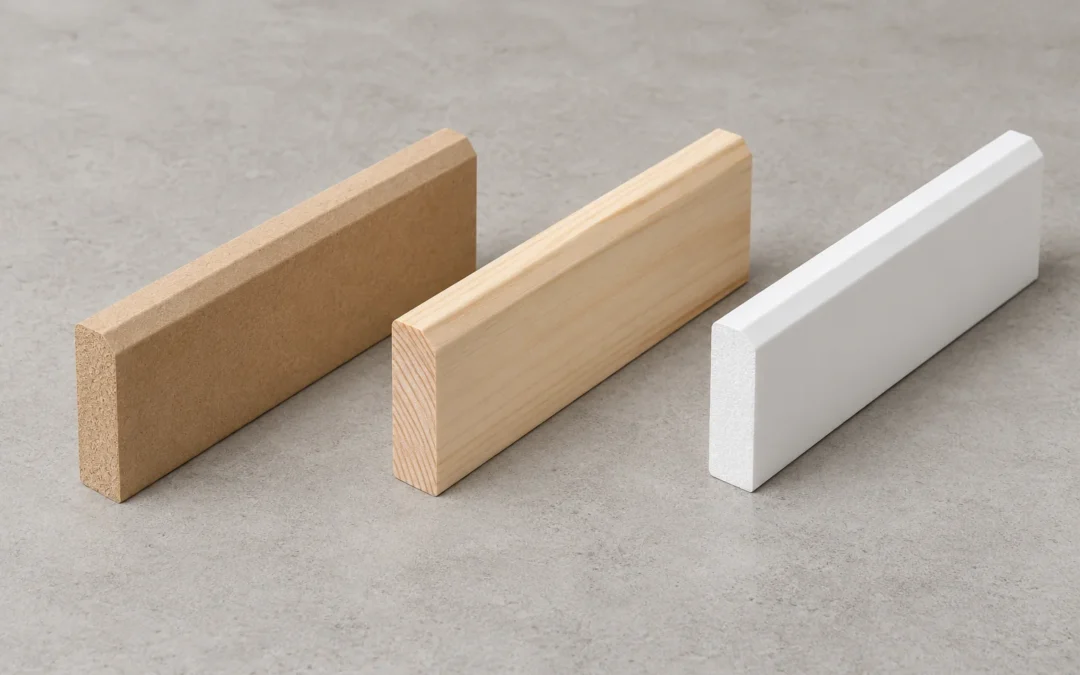
For a dry, painted room, MDF can be a sensible baseboard choice. Choose stain-grade wood when you want visible grain. In bathrooms and basements, consider an interior-suitable PVC product or a specifically approved moisture-resistant MDF product—but first understand where moisture is coming from. A different baseboard will not fix a leaking shower, damp wall or wet basement.
The best choice is not simply “wood upstairs, plastic downstairs.” It depends on exposure, the finish you want, the existing trim and the installation instructions for the actual product. Here is a practical way to compare them for a Niagara renovation.
MDF: useful for painted trim, with moisture limits
MDF is an engineered wood-fibre material. Its smooth, consistent surface makes it useful for painted profiles; Metrie’s MDF manufacturing overview describes that paint-grade application. It is a different choice from solid wood selected to show natural grain.
Do not treat a factory primer as protection against every exposure. ARAUCO’s MDF moulding instructions explain that MDF can absorb moisture and move, and call for appropriate storage, acclimation, fastening and finishing.
Standard MDF and moisture-resistant MDF are not interchangeable descriptions. The Composite Panel Association’s MDF mouldings bulletin identifies enhanced moisture resistance as something to consider for bathroom and slab-on-grade baseboard applications. That does not establish the suitability of an unlabelled board at the store.
Ask for the specific product designation and its permitted exposure. Even MEDITE’s moisture-resistant MDF guidance distinguishes humid-interior use from waterproofing and requires appropriate sealing and coating. It is a useful reminder—not a specification for every moulding brand.
Wood: choose it for the finish, not an assumption of immunity
Wood is worth considering when the baseboard will be stained or clear-finished, or when matching existing woodwork is important. Bring a sample of the existing trim: species, grain, profile and finish can matter as much as the label “solid wood.” Paint-grade and stain-grade products serve different goals.
Wood also responds to moisture. WindsorONE’s guidance includes interior acclimation requirements; follow the requirements for the wood product you actually choose rather than borrowing one manufacturer’s moisture limits for every species and moulding.
For an older Niagara home, compare the proposed baseboard beside the door casing before ordering the whole room. A nearly matching profile can look less intentional than a clearly coordinated new one.
PVC: a moisture-conscious option, not a room-wide solution
An interior-suitable PVC trim product can be useful where moisture exposure influences the selection. Confirm that the manufacturer supports the intended interior application; an exterior trim guide alone is not a complete interior specification.
For example, VERSATEX’s interior retrofit guide expressly includes a baseboard application and distinguishes its interior methods from exterior installation. It also discusses drying and remediation of the wall cavity after flooding. Keeping the trim intact is not the same as keeping the wall assembly dry.
Check the specified fastening, adhesives, joints and paint system. Do not assume all PVC products accept the same glue, paint or installation method. Take a physical sample home to judge the profile and finish against neighbouring wood or MDF casing.
How to choose room by room
- Dry bedroom, hall or living room: compare painted MDF with paint-grade wood on profile, finish and the complete installed scope. Choose stain-grade wood if natural grain is the goal.
- Bathroom: distinguish normal room humidity from repeated splashing, a leak or a persistently wet floor edge. Confirm the product’s suitability for that exposure and address the cause of recurring wetness.
- Finished basement: establish whether the wall and floor perimeter are dry before selecting trim. A moisture-tolerant baseboard should not conceal an unresolved dampness problem.
- Partial renovation: prioritize the junction with existing casing, adjoining rooms and flooring. Keep a labelled sample for future repairs.
If the flooring is also changing, choose the edge detail together with it. Our vinyl plank versus tile basement guide can help frame that broader decision. Follow the flooring manufacturer’s perimeter and movement requirements rather than assuming the baseboard can be installed the same way over every floor.
A short checklist before ordering
- Identify the exact material and grade. Record the manufacturer, profile and product code, including any moisture-resistance designation.
- Check the finished dimensions. Compare height, thickness and how the trim meets door casing, cabinets and transitions.
- Agree on preparation and finish. Include acclimation where required, cut-end treatment, joint finishing and the approved coating system.
- Inspect existing damage first. Investigate swelling, staining or recurring dampness instead of simply covering it.
- Compare complete quotes. Include removal, wall touch-ups, installation and painting—not just the price of a length of board.
Common questions
Can MDF baseboards go in a bathroom?
Sometimes, but the product and exposure matter. Do not assume standard MDF is suitable because it will be painted. Ask for manufacturer confirmation and distinguish moisture-resistant material from waterproof material.
Should every basement have PVC baseboards?
No. A dry finished basement and one with unresolved water entry are different situations. Assess the conditions, choose a supported product and resolve moisture problems independently of the trim selection.
Does all the trim in the house need to be the same material?
Not necessarily. Consistent profiles, proportions and finish can help different materials look coordinated. Test the meeting points with real samples before committing.
Plan the trim with the renovation
Baseboards are a finishing decision, but they belong in the plan before installation day. For a basement renovation or bathroom renovation in Niagara, contact Homes By Adam to discuss the room, existing finishes and the details you want to retain.
